Ragdoll Soccer Clubs Mode Guide
Turn friend groups into a chemistry machine — roles, callouts, warm-ups, and grit when a Clubs night goes sideways.
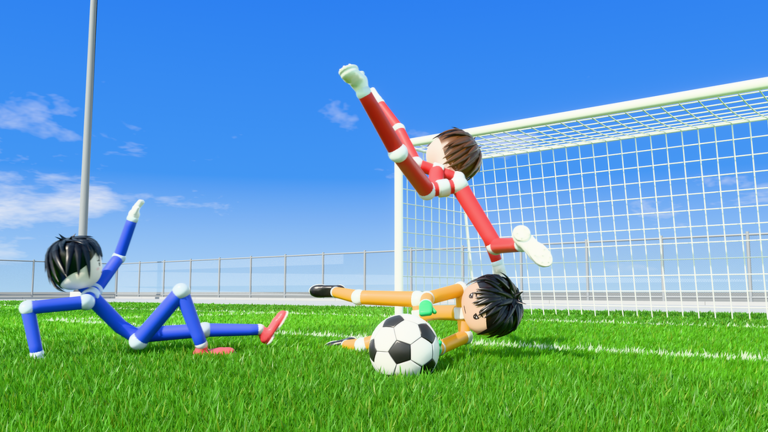
Clubs is where Ragdoll Soccer stops being a random lobby and starts feeling like your team night. You still play the same floppy physics soccer as public 4v4, but the social contract changes: friends can assign roles, call plays, rematch without teaching strangers, and laugh through ragdoll chaos together. This guide shows how to run Clubs sessions that stay fun past the first comedy own-goal.
If you are brand new, finish Getting Started and skim Game Modes first. Movement and camera live on Controls; finishing patterns on How to Score; role language on Players and the roles tier list.
Mid-article you will see a community clutch clip — a messy late-game situation where teammates left and the remaining player still found a way. Use it as motivation for composure and grit, not as a promise that every abandoned Clubs match becomes a cinematic 4v1 win. The real lesson is recovery habits when numbers change.
What Clubs is (and is not)
Clubs is the friends-first playlist with a typical 4v4 feel: enough space to pass, enough chaos to stay hilarious, and a roster you actually know. It is ideal for:
- Private or semi-private group nights
- Practicing named roles with people who listen
- Voice-chat chemistry and rematch culture
- Teaching a new friend without public-lobby pressure
Clubs is not:
- A full replacement for learning 8v8 Pro rules (referees, penalties, free kicks, throw-ins, VAR, offsides)
- An excuse to skip Practice warm-ups
- Automatically more “serious” than quickplay — seriousness is a group choice
Think of Clubs as 4v4 with a shared brain. Public quickplay is 4v4 with four strangers guessing.
Pre-match role assignment
Before kickoff, spend sixty seconds assigning a simple shape. You do not need esports binders — you need four clear jobs:
| Role vibe | Job in Clubs | Avoid |
|---|---|---|
| Finisher | Arrives on cutbacks, hunts rebounds, takes composed shots | Ball-chasing every touch |
| Linker | Soft touches between lines, switches play, calls “leave/soft” | Hero solo carries every break |
| Defender | First contact on counters, clears away, protects keeper space | Joining every attacking pile |
| Keeper | Claims box, cuts angles, talks early | Silent line + panic off-line sprints |
Rotate roles across a session so nobody is stuck forever — especially keeper. Deepen the vocabulary with tier list roles and teammate habits on Players. Finishing detail for your striker lives on How to Score; glove detail on the Goalkeeper guide.
Chemistry checklist (pin this in Discord)
Run this five-point check before the first whistle:
- Everyone warmed up — at least five minutes in Practice together or solo.
- Roles spoken aloud — finisher / linker / defender / keeper named.
- Three callouts agreed — example: “mine,” “away,” “reset.”
- Coins handled — redeem WELCOME for 250 Coins in the shop Codes tab before kickoff so nobody AFKs mid-match shopping. Full steps on Codes and How to Redeem.
- Tilt rule — one comedy flop is funny; three revenge dives means a Practice reset.
Optional sixth item: open the session planner tools page if your group likes structured night plans, coin reminders, or checklist-style prep.
Callouts that actually work
Ragdoll piles punish silence. Keep language short:
- “Soft left / soft right” — placeable pass, not a rocket
- “Leave” — do not double-hit; let it run to the finisher
- “I’m arriving” — cutback or rebound runner is coming
- “Keeper!” — claim in progress; defenders peel out
- “Away” — clear first, fancy later
- “Reset” — cameras and posture after a dogpile
- “Drop / push” — spacing after a long clearance
If someone is on mobile without easy voice, agree that chat macros or a single keyword still count. Chemistry is consistency, not volume.
Practice warm-up with friends
A shared warm-up beats four people queuing cold:
- Two minutes — camera and soft-touch lanes (Controls).
- Three minutes — pass-and-finish pairs (linker soft into finisher).
- Three minutes — defender clearance + keeper claim reps (Goalkeeper).
- Two minutes — one “messy rebound” drill where nobody joins a pile on purpose; hunt the spill instead.
Then enter Clubs with one group focus for match one (only soft setups, or only called claims). Change the focus each rematch so the night teaches something.
How Clubs differs from public 4v4 and from 8v8 Pro
vs public 4v4 quickplay
- You can pre-assign roles instead of hoping randoms space out
- Rematches preserve chemistry; public lobbies reshuffle chaos
- Teaching a new player is kinder and faster
- You can enforce house rules (no revenge diving, rotate keeper)
vs 8v8 Pro
- Clubs keeps the smaller 4v4 cognitive load
- Pro adds referees, penalties, free kicks, throw-ins, VAR, and offsides
- Clubs is the best place to build trust before you take the same friend group into denser Pro traffic
- Do not assume Clubs habits equal Pro readiness — read Game Modes before your first refereed night
A healthy weekly loop: Practice → Clubs chemistry → occasional Pro exam → back to Clubs to decompress.
When a teammate leaves mid-match
It happens: disconnects, bedtime, “one more game” turning into zero players. The mid-page clutch video captures the emotional peak of playing short-handed — treat it as a composure reference, not a guarantee.
Recovery habits that help when you go down a body:
- Simplify roles. One person anchors deeper; stop all four (or three) ball-chasing.
- Prioritize clears and second balls over highlight dribbles.
- Talk more, not less. The remaining players need louder “reset” and “away” calls.
- Protect the keeper’s box. Short-handed teams die when everyone abandons shape for a hopeful pile.
- Accept ugly wins. A bounce-clear-bounce goal counts the same as a filmable chain.
- Know when to reset the night. If two people leave, remake the lobby or swap to Practice mini-games instead of tilting through a doomed rematch.
Grit is real in Ragdoll Soccer. Delusion is queueing the same broken lobby five times while blaming physics.
Session planner for a 60–90 minute Clubs night
- Redeem or confirm codes (WELCOME if still unclaimed).
- Shared Practice warm-up (10 minutes).
- Role assign + callout refresh (2 minutes).
- Clubs match block 1 with one focus (20–25 minutes).
- Water / meme break; optional tools checklist glance.
- Rotate keeper and one outfield role.
- Clubs match block 2; optional harder focus (cutbacks only, or no pile joining).
- Optional cool-down Practice or a single public 4v4 to test chemistry against randoms.
- Note one habit for next week; skim Updates if a patch dropped.
Common Clubs failure modes
- Nobody claims a keeper, so the net becomes a revolving door of panic
- Four finishers, zero linkers — every attack is a crowded mash
- Shopping mid-match because codes were ignored pre-kickoff
- Voice chat used only for insults after flops, never for “soft left”
- Treating Clubs as Pro practice without reading Pro rules
- Forcing the same friend to stay goalkeeper all night
Where to go next
- Mode context: Game Modes
- Starter coins: Codes
- Teammate and role language: Players, Roles
- Night structure helpers: Tools
- Keeper depth: Goalkeeper
- Full index: Guides Hub
Clubs rewards the group that prepares for sixty seconds, warms up for ten minutes, and keeps calling the next ball after a flop. Assign roles, redeem WELCOME early, rotate the gloves, and when someone leaves, simplify — then earn the scrappy win the honest way.
Frequently Asked Questions
Quick answers for Ragdoll Soccer players.
What is Clubs mode in Ragdoll Soccer?
Clubs is the friends-focused playlist with a typical 4v4 feel. You get social coordination, rematches, and role assignment that public quickplay rarely provides.
How should we assign roles before a Clubs match?
Name a finisher, linker, defender, and keeper out loud. Keep it simple, rotate across the session, and use the roles tier list if you want deeper language.
Should we redeem WELCOME during the match?
No. Redeem WELCOME for 250 Coins in the shop Codes tab before kickoff so nobody AFKs shopping mid-play. See the Codes hub for steps.
How is Clubs different from 8v8 Pro?
Clubs stays in the smaller 4v4 social space. Pro adds referees, penalties, free kicks, throw-ins, VAR, and offsides — learn those rules separately before treating Clubs as Pro practice.
What do we do if a teammate leaves mid-Clubs match?
Simplify shape, clear earlier, talk louder, protect the box, and chase second balls. Use clutch clips as composure inspiration, not as a promise every short-handed game is winnable.